
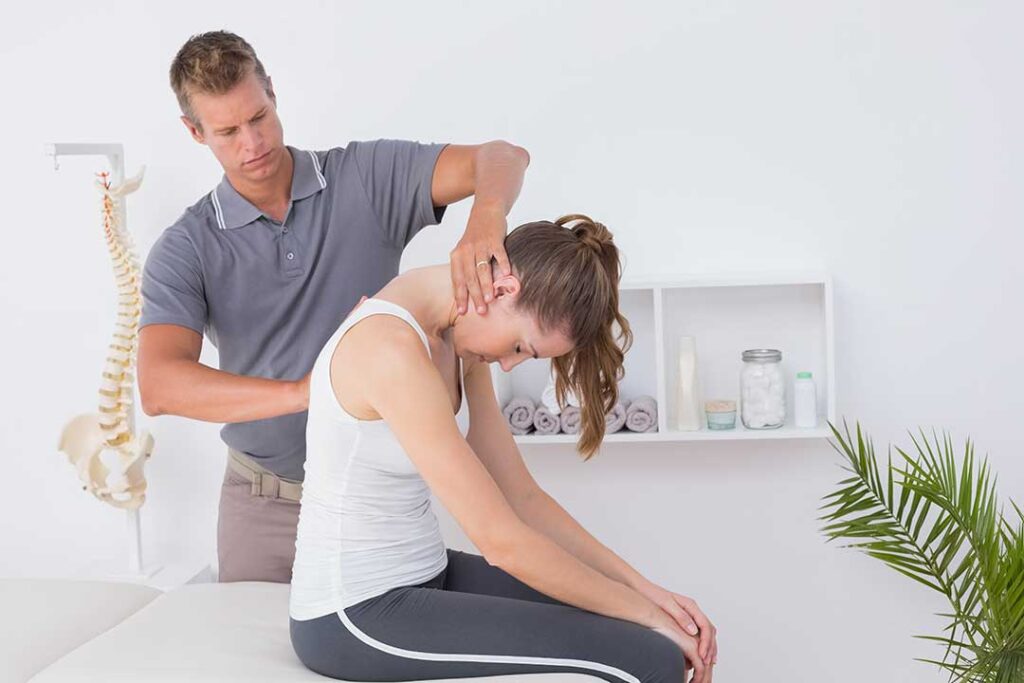
Why movement throughout the day matters
Healthy movement is not limited to exercise sessions. For residents of Utica, NY, it also includes how the body transitions between sitting, standing, walking, lifting, reaching, driving, working, and resting during ordinary routines.
Long periods in one position can leave the neck, shoulders, back, hips, or legs feeling stiff. Repeatedly using the same posture or movement pattern may also contribute to discomfort over time. The goal is not to maintain perfect posture every minute. A more practical approach is to change positions regularly, use comfortable body mechanics, and build short periods of movement into the day.
How often should someone change position?
A useful general guideline is to avoid staying in the same position for more than 30 to 60 minutes when possible. The exact timing depends on the activity, the person’s health, and the amount of discomfort involved.
Position changes can be simple:
- Stand while taking a phone call.
- Walk briefly after finishing a task.
- Roll the shoulders and gently move the neck after computer work.
- Shift between sitting and standing during household activities.
- Take a few steps whenever moving between rooms.
These short breaks do not need to become formal workouts. Their purpose is to restore movement, reduce prolonged loading on one area, and help the body feel less restricted.
What is a healthier way to sit?
Healthy sitting involves support, variety, and regular breaks rather than a rigid “perfect” position. Keep both feet supported when possible, allow the knees and hips to remain comfortable, and let the lower back rest against the chair. The screen should be high enough that the head does not remain bent forward for long periods.
Avoid sitting on the edge of a chair for extended periods, twisting toward a screen, or leaning heavily to one side. If a workstation cannot be adjusted, changing position more often becomes especially useful.
For people working from home, studying, or managing household paperwork, practical adjustments may include:
- Placing frequently used items within easy reach.
- Supporting the forearms during keyboard or mouse use.
- Keeping the screen near eye level.
- Alternating between seated tasks and standing tasks.
- Using a small foot support if the feet do not rest comfortably on the floor.
A chair does not need to be expensive to support healthy movement. Comfort, adjustability, and the ability to change position usually matter more than a particular style.
How can movement be added during work and household tasks?
The most sustainable movement habits are attached to activities that already happen every day. For example, a person might walk briefly after a meal, perform gentle leg movements while waiting for water to boil, or stretch the calves after standing at a counter.
Household tasks also provide opportunities to vary movement. Carrying lighter loads in separate trips may reduce strain compared with lifting one overly heavy load. Alternating hands for certain light tasks can prevent one side of the body from doing all the work. Reaching should be done with the body facing the object whenever possible rather than repeatedly twisting from the waist.
During desk-based work, consider using natural transition points as reminders:
- After sending several messages, stand and move for a minute.
- Walk to another room after completing a work block.
- Perform a few gentle shoulder blade movements between tasks.
- Adjust the chair or screen if discomfort begins rather than waiting until it becomes severe.
Movement should feel controlled and comfortable. Stretching aggressively or forcing a joint beyond its usual range can create more irritation instead of relief.
What should people know about winter movement?
Seasonal conditions can change how people move. Snow, ice, cold temperatures, and heavier clothing may make walking more cautious and increase muscle tension. During winter, allow extra time for outdoor movement so there is less need to hurry across slippery surfaces.
Before walking outdoors, use footwear with reliable traction and choose cleared, well-lit paths when available. Shorter walks may be appropriate during severe weather, with additional movement indoors. After time outside, gentle movement can help the body transition from cold, guarded postures.
Snow removal deserves particular care. Push snow when conditions allow instead of lifting it repeatedly. If lifting is necessary, keep the load small, face the direction of movement, bend through the hips and knees, and avoid throwing snow while twisting. Stop if pain becomes sharp, spreads into an arm or leg, or is accompanied by weakness, numbness, dizziness, or shortness of breath.
How should someone lift and carry objects?
Safe lifting begins before the object leaves the ground. Check its weight, clear the path, and decide where it will be placed. Keep the object close to the body and turn with the feet rather than rotating the trunk while carrying.
For a floor-level object:
1. Move close to it.
2. Place the feet in a stable position.
3. Bend through the hips and knees.
4. Keep the back in a comfortable, neutral position.
5. Lift smoothly without jerking.
6. Carry the object close to the body.
Not every lift requires a deep squat. The key principles are proximity, control, a clear path, and avoiding twisting under load. If an object is too heavy, awkward, or unstable to manage safely, dividing the load or asking for assistance is sensible.
Is soreness after movement always a problem?
Mild, temporary muscle fatigue can occur after unfamiliar activity and may improve with rest, hydration, gentle movement, and gradual progression. Persistent or worsening pain deserves more attention, especially if it interferes with walking, sleep, work, or ordinary activities.
Seek prompt medical evaluation for symptoms such as:
- New weakness or loss of coordination.
- Numbness that persists or spreads.
- Loss of bladder or bowel control.
- Severe pain after a fall or other injury.
- Chest pain, fainting, or unusual shortness of breath.
- Pain accompanied by fever or unexplained weight loss.
For recurring musculoskeletal discomfort, a qualified health professional can help determine whether the issue relates to movement habits, injury, joint problems, nerve involvement, or another medical condition. Self-care should not delay evaluation when symptoms are severe, unusual, or progressing.
How can movement become a realistic daily habit?
Start with one or two changes that fit existing routines. A person who rarely takes breaks may begin with a two-minute walk every hour. Someone who spends much of the day standing may focus on alternating foot positions, using brief seated breaks, and avoiding prolonged leaning to one side.
Tracking discomfort can also reveal patterns. Note the activity, duration, position, and symptoms rather than focusing only on a diagnosis. This may show that stiffness appears after long drives, extended screen time, repetitive lifting, or insufficient recovery between activities.
A balanced daily pattern includes movement, rest, sleep, and gradual increases in activity. Comfortable walking, mobility exercises, strength training, and ordinary household movement can all contribute. The most useful plan is one that can be repeated safely through changing seasons and everyday demands in the community.
